
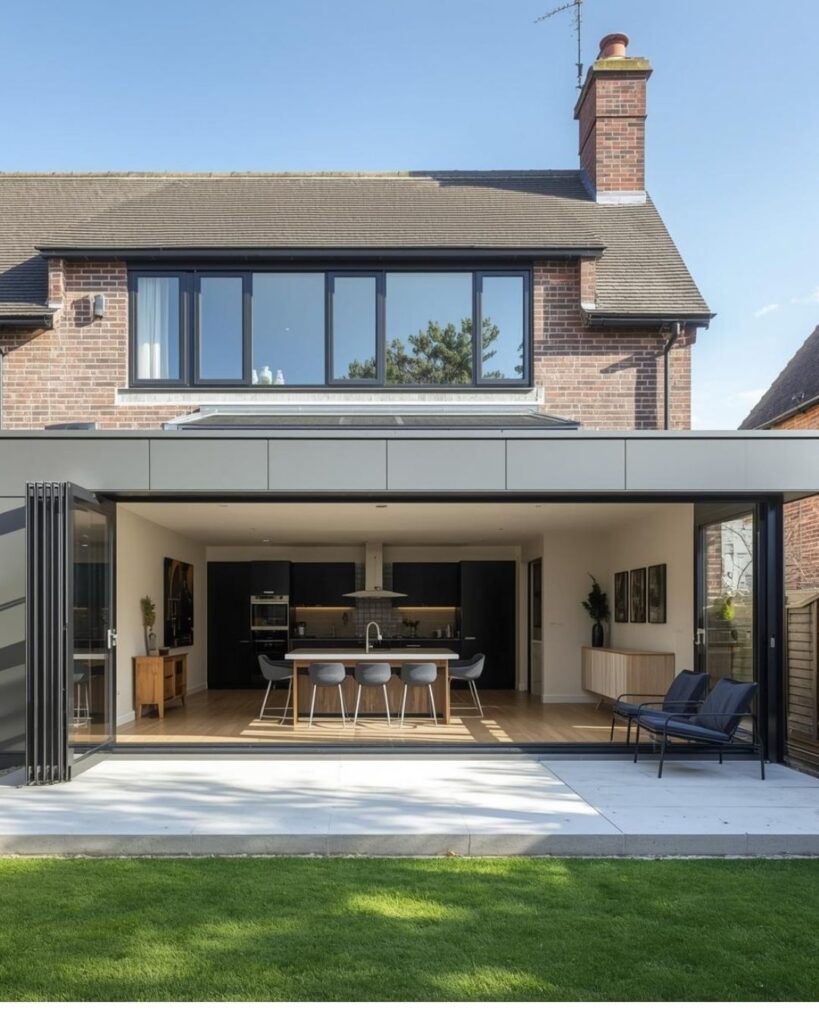
Single Storey vs Double Storey Extensions: Which Is Right for Your Worthing Home?
When your Worthing home needs more space, an extension offers the perfect solution. But one of the first decisions you’ll face is whether to build single storey or double storey. Both options add valuable living space, yet they differ significantly in cost, planning requirements, build time, and impact on your property.
Choosing the right extension type depends on your specific needs, budget, property layout, and how you want your home to function. This guide compares single and double storey extensions, helping Worthing homeowners make informed decisions about which approach suits their circumstances best.
Understanding the Basics
Single Storey Extensions
Single storey extensions add ground floor space only, typically extending into your rear garden or along the side of your property. They’re the most common extension type, frequently used to create larger kitchens, open-plan kitchen-diners, garden rooms, or additional living space.
Single storey extensions suit properties across Worthing—from Victorian terraces in the town centre to 1930s semis in Broadwater and post-war bungalows in Goring-by-Sea.
Double Storey Extensions
Double storey extensions add space on two levels simultaneously—ground floor and first floor built together as one structure. They’re ideal when you need both additional living space downstairs and extra bedrooms or bathrooms upstairs.
Double storey extensions suit larger properties with sufficient garden depth and width to accommodate the additional bulk. Properties across Tarring, Durrington, and Findon often have plots that accommodate double storey additions well.
Cost Comparison
Cost is often the primary factor in choosing between extension types. Here’s how they compare in Worthing in 2026.
Single Storey Extension Costs
Expect to pay between £1,800 and £2,800 per square metre for a quality single storey extension in Worthing, depending on specification and complexity.
Typical project costs:
- Small single storey (15 sqm): £27,000-£42,000
- Medium single storey (20 sqm): £36,000-£56,000
- Large single storey (30 sqm): £54,000-£84,000
These figures include groundwork, construction, roofing, windows, doors, plastering, electrics, and basic finishing. Kitchen or bathroom fitting, flooring, and decoration add to overall costs.
Double Storey Extension Costs
Double storey extensions cost more in total but offer better value per square metre because foundations, walls, and roof serve two floors rather than one.
Expect to pay between £1,500 and £2,400 per square metre for the upper floor—less than ground floor rates because the foundations and roof structure are already included.
Typical project costs:
- Small double storey (30 sqm total): £50,000-£75,000
- Medium double storey (40 sqm total): £65,000-£95,000
- Large double storey (60 sqm total): £95,000-£140,000
Cost Per Square Metre Comparison
Here’s where double storey extensions show their value:
Single storey 20 sqm: £36,000-£56,000 (£1,800-£2,800 per sqm) Double storey 40 sqm: £65,000-£95,000 (£1,625-£2,375 per sqm)
Building upward costs significantly less per square metre than building outward. If you need substantial additional space, a double storey extension often delivers better value than a large single storey alternative.
Planning Permission Considerations
Planning requirements differ significantly between extension types, affecting both timescales and what you can build.
Single Storey Permitted Development
Many single storey extensions fall under permitted development rights, meaning no planning application is required. Under current rules, you can typically extend:
- 3 metres from the original rear wall for attached houses
- 4 metres from the original rear wall for detached houses
- Up to 6 metres (attached) or 8 metres (detached) through prior approval
Single storey extensions must not exceed 4 metres in height, and eaves cannot be higher than existing eaves or 3 metres, whichever is lower.
Properties across Worthing’s residential areas—Broadwater, West Worthing, and East Worthing—frequently build single storey extensions under permitted development, avoiding planning delays and application costs.
Double Storey Planning Requirements
Double storey extensions have stricter rules and more frequently require planning permission.
Under permitted development, double storey extensions must:
- Not extend more than 3 metres from the original rear wall
- Be at least 7 metres from the rear boundary
- Have eaves no higher than existing eaves
- Use matching materials
The 7-metre boundary rule often proves problematic. Many Worthing properties—particularly terraces and smaller semis—cannot meet this requirement, making planning permission necessary.
Double storey extensions also face greater scrutiny regarding impact on neighbours. Overlooking, loss of light, and visual dominance all require consideration.
Conservation Areas and Listed Buildings
If your Worthing property is in a conservation area or listed, both extension types require additional permissions. Single storey extensions that would normally fall under permitted development may need planning approval in these locations.
Build Time Comparison
Extension duration affects how long you’ll live with building work disruption.
Single Storey Build Time
Most single storey extensions complete in 10-14 weeks from breaking ground to handover:
- Groundwork and foundations: 1-2 weeks
- Walls and roof structure: 2-3 weeks
- Roofing and weatherproofing: 1-2 weeks
- Windows, doors, and external finishing: 1-2 weeks
- First fix (electrics, plumbing): 1 week
- Plastering: 1 week
- Second fix and finishing: 2-3 weeks
Simpler extensions may complete in 8-10 weeks. Complex projects with structural alterations to existing buildings take longer.
Double Storey Build Time
Double storey extensions typically require 14-20 weeks:
- Groundwork and foundations: 2-3 weeks
- Ground floor walls: 2 weeks
- First floor structure and walls: 2-3 weeks
- Roof structure and covering: 2-3 weeks
- Windows, doors, and external finishing: 2 weeks
- First fix throughout: 2 weeks
- Plastering: 1-2 weeks
- Second fix and finishing: 3-4 weeks
The additional time reflects more complex structural work, scaffolding requirements, and greater internal finishing across two floors.
Impact on Your Property
Garden Space
Single storey extensions consume garden space proportional to their footprint. A 20 sqm extension takes 20 sqm from your garden.
Double storey extensions take the same footprint but deliver twice the internal space. If garden preservation matters, building upward rather than outward makes sense.
Properties across Goring-by-Sea, Ferring, and Worthing’s coastal areas often have modest gardens where minimising extension footprint preserves valuable outdoor space.
Natural Light
Single storey extensions can incorporate large roof lights and lanterns, flooding spaces with natural light from above. They rarely affect light to existing first floor rooms.
Double storey extensions may impact light to neighbouring properties—a planning consideration—and can darken existing ground floor rooms if not carefully designed. However, they create opportunities for first floor windows with views and light that ground floor spaces cannot match.
Neighbours and Boundaries
Single storey extensions typically have less impact on neighbours due to lower height. They’re less likely to cause overlooking or significant overshadowing.
Double storey extensions require careful design to avoid overlooking neighbours’ gardens and windows. Side-facing first floor windows often need obscured glazing. The increased bulk can feel imposing, particularly on smaller plots common in Worthing’s older residential areas.
Which Extension Type Suits Your Needs?
Choose Single Storey If:
- You primarily need ground floor space (kitchen, living area, utility)
- Your garden is small and you want to minimise footprint impact
- You prefer faster build times with less disruption
- Your budget is limited
- You want to avoid planning permission delays
- Your property is terraced or has close neighbours
- You’re extending a bungalow
Single storey extensions suit many Worthing properties, particularly the Victorian and Edwardian terraces around the town centre and older semis across Broadwater and Tarring where plots limit double storey options.
Choose Double Storey If:
- You need both living space and bedrooms/bathrooms
- Budget efficiency per square metre matters
- Your plot can accommodate the additional bulk
- You have a growing family needing multiple extra rooms
- Garden preservation is important
- Your property is detached or has generous side/rear space
- You’re planning to stay long-term and want maximum space
Double storey extensions suit larger properties across Durrington, Findon, High Salvington, and Worthing’s more spacious residential areas where plots accommodate substantial additions.
Consider Both Levels Independently
Sometimes the answer isn’t either/or. You might build a large single storey rear extension for open-plan living plus a smaller first floor extension above part of it for one additional bedroom. This hybrid approach—sometimes called a part single/part double storey extension—delivers flexibility where full double storey isn’t feasible or necessary.
Making Your Decision
The right choice depends on balancing multiple factors:
Space requirements: What rooms do you actually need? Ground floor only, or both levels?
Budget: Can you afford double storey? Does the cost per square metre saving justify the higher total investment?
Plot constraints: Does your garden depth and boundary situation permit double storey under permitted development, or will planning permission be required?
Neighbour impact: Will double storey create overlooking or overshadowing issues that complicate planning approval?
Timeline: Do you need the project completed quickly, favouring simpler single storey construction?
Future plans: Are you staying long-term, making maximum space worthwhile, or might you move within a few years?
Getting Professional Advice
Every property is different. Plot dimensions, existing layout, boundary positions, and local planning context all influence what’s achievable and advisable. Professional assessment helps you understand your options before committing.
We build single storey and double storey extensions throughout Worthing and surrounding areas including Goring-by-Sea, Ferring, Tarring, Broadwater, Durrington, Findon, High Salvington, Salvington, West Worthing, East Worthing, Lancing, Sompting, and surrounding West Sussex villages. We assess your property, discuss your requirements, and advise honestly on which extension type delivers the best results for your specific situation.
Considering an extension for your Worthing home? Contact us for a free consultation and expert advice on the best approach for your property.